Lessons That Ripple: What Four Living Buildings Taught Us
Living Future
|
Marc Brune
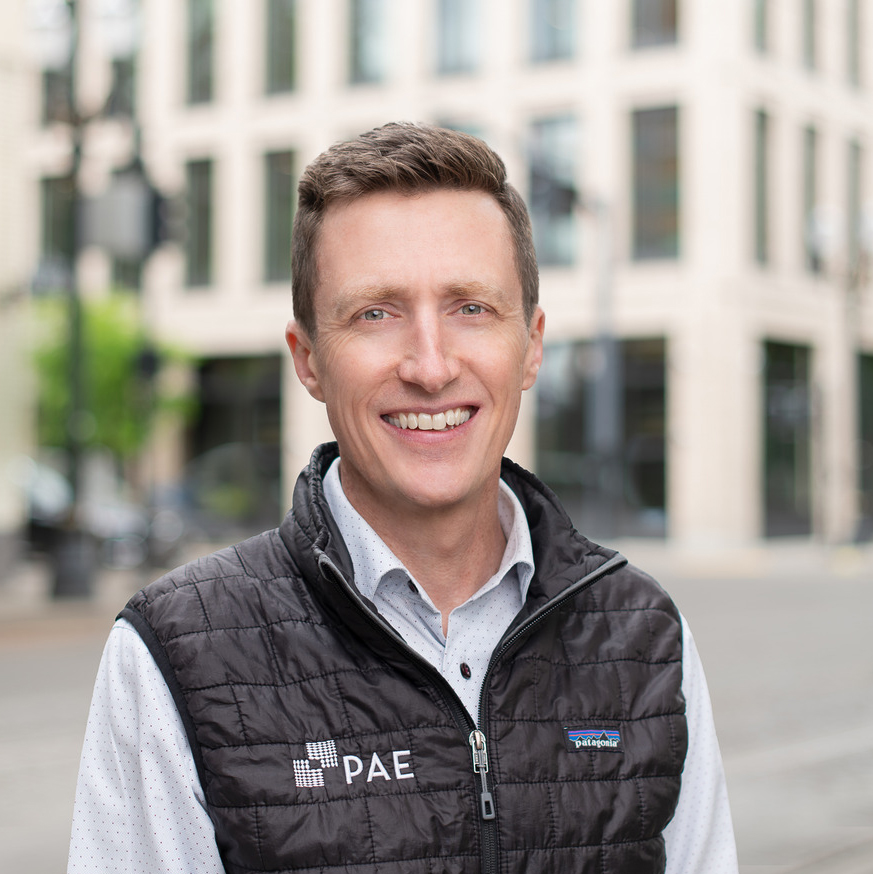
Over the past two decades, few engineers have had a closer view of the evolution of regenerative design than Marc Brune. As a Senior Principal and mechanical engineer at PAE, he has helped shape the mechanical and energy systems behind landmark projects including the Bullitt Center, the Rocky Mountain Institute Innovation Center, the Kendeda Building at Georgia Tech, and the PAE Living Building.
In this reflection, Marc shares four enduring lessons from these pioneering projects and the challenges that ultimately pushed them—and the industry—forward. Reflecting on the experience, Marc says, “We have had the honor of working on four Living Buildings, each one rich with lessons for us and for others in the built environment and real estate communities. I’ve distilled one lesson from each that I think has the most staying power: The biggest barriers always seem to inspire the greatest leap forward.”
The biggest barriers always seem to inspire the greatest leap forward.
Lesson 1
Biological Systems Are Powerful—and Demanding
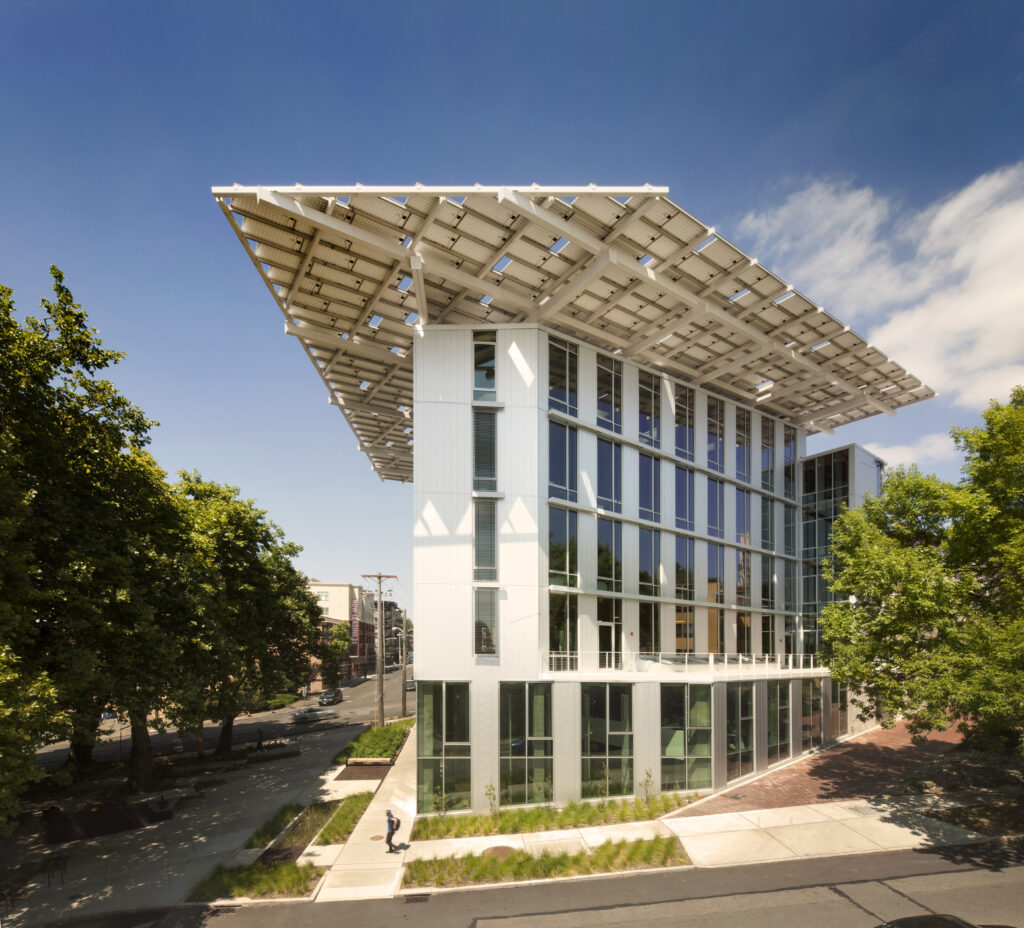
Bullitt Center | Photo by Nic Lehoux
When the Bullitt Center opened in 2013, many in our industry were certain of one thing: this was impossible. A six-story commercial office building in a dense urban neighborhood in Seattle could not be net-zero energy. It certainly could not be net-zero water. And it absolutely could not rely on composting toilets and a rooftop solar canopy to carry that ambition. The Bullitt Center proved otherwise.
The photovoltaic canopy, extending up to 20 feet beyond the façade, has produced enough energy for the Bullitt Center to be net positive for the last decade. With efficiency as the top strategy, the building demonstrated that net-zero energy in a multi-story urban office was not a fantasy, but a design problem waiting to be solved.
But the Bullitt Center was also candidly experimental. As Bullitt Foundation CEO Denis Hayes has said, “The Bullitt Center is a giant experiment. If everything had worked perfectly, that would have meant we hadn’t been bold enough.”
That spirit of boldness shaped the lessons and successes that followed.
The Bullitt Center taught us that biological systems like composting toilets are more nuanced than mechanical systems. They require time, calibration, and careful stewardship. Composting, in particular, is highly sensitive to moisture. The foam-flush system and fixed pipes made moisture management difficult over time. Those lessons did not push us away from net-zero water, but pushed us to refine it.
At the PAE Living Building nearly a decade later, we reimagined the plumbing entirely. Vacuum-flush toilets use just one-tenth of a gallon per flush and send material to 20 composters—twice as many as in Bullitt’s design—using a pumped distribution system to balance loads and improve moisture control. A bypass to the sanitary sewer provides operational resilience without compromising intent.
We also expanded into nutrient recovery, processing captured urine into commercial fertilizer. Instead of treating nutrients as waste, they become a product, closing loops and hinting at what scaled recovery in larger buildings could mean.
The lesson was not that composting is too hard. The lesson was that living systems demand living design that is iterative, adaptive, and operationally informed.
Lesson 2
Climate Myths Are Design Challenges in Disguise
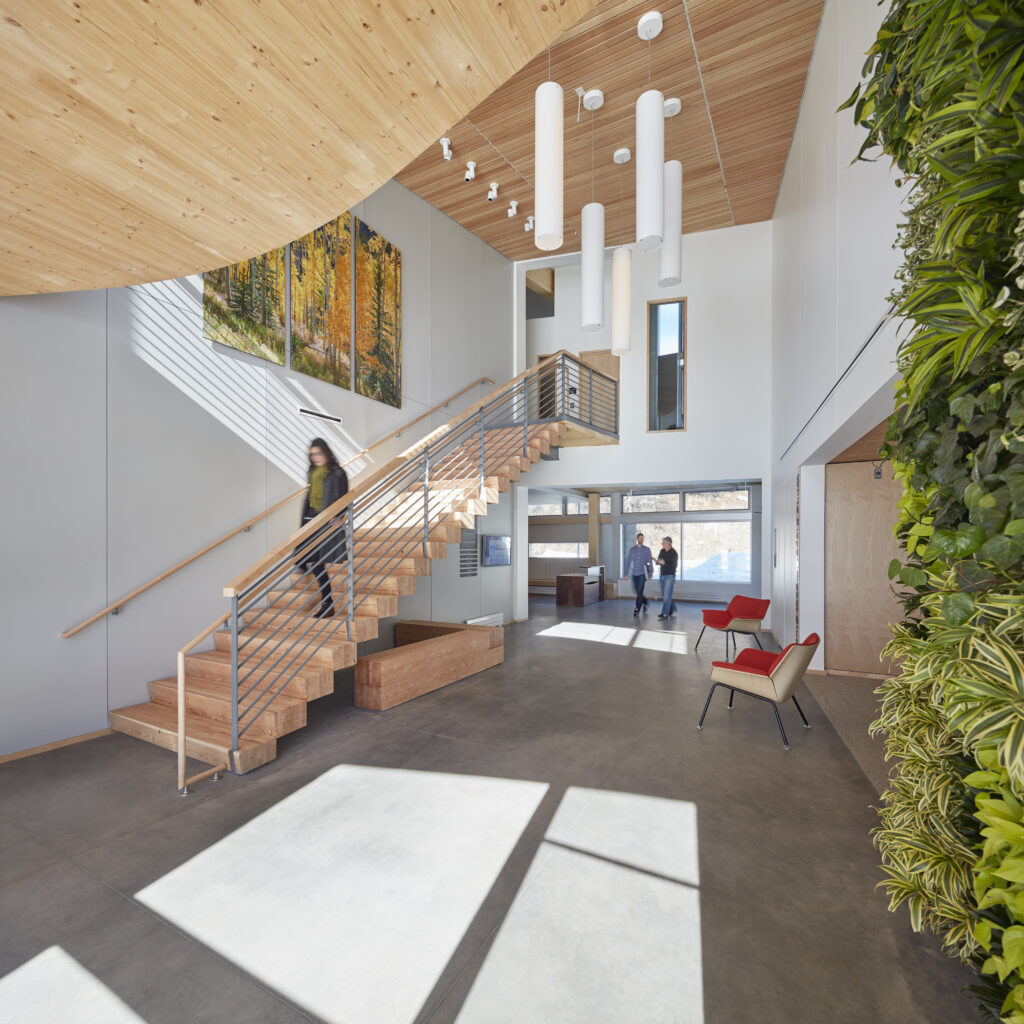
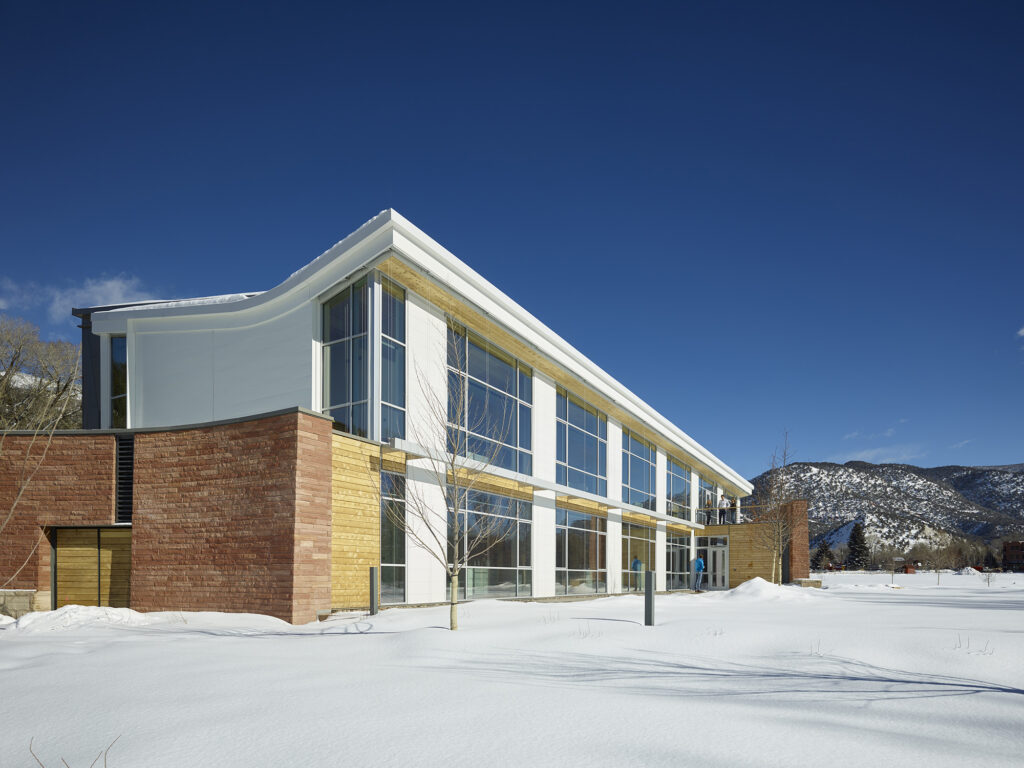
RMI Innovation Center | Photo by Tim GriffithsRMI Innovation Center | Photo by Tim Griffiths
After Seattle, the next “impossible” frontier was cold weather.
When RMI’s Innovation Center (RMI) opened in 2016 in Basalt, Colorado, the conventional wisdom was that net-zero energy Living Buildings did not belong in climates with sub-zero winters and dramatic daily temperature swings.
The RMI project dispelled that myth. Through an exceptionally high-performance envelope and highly effective heat recovery, we reduced heating demand to such a small level that the mechanical system had very little work to do. This allowed us to use electric resistance heating, a remarkably simple system. While resistance heating is far less efficient than a heat pump, the loads were so low that it didn’t matter.
The building proved that net-zero energy is achievable in the Rockies not through added complexity, but through thoughtful reduction, enabling simpler, smaller, and more reliable systems.
Then came heat and humidity.
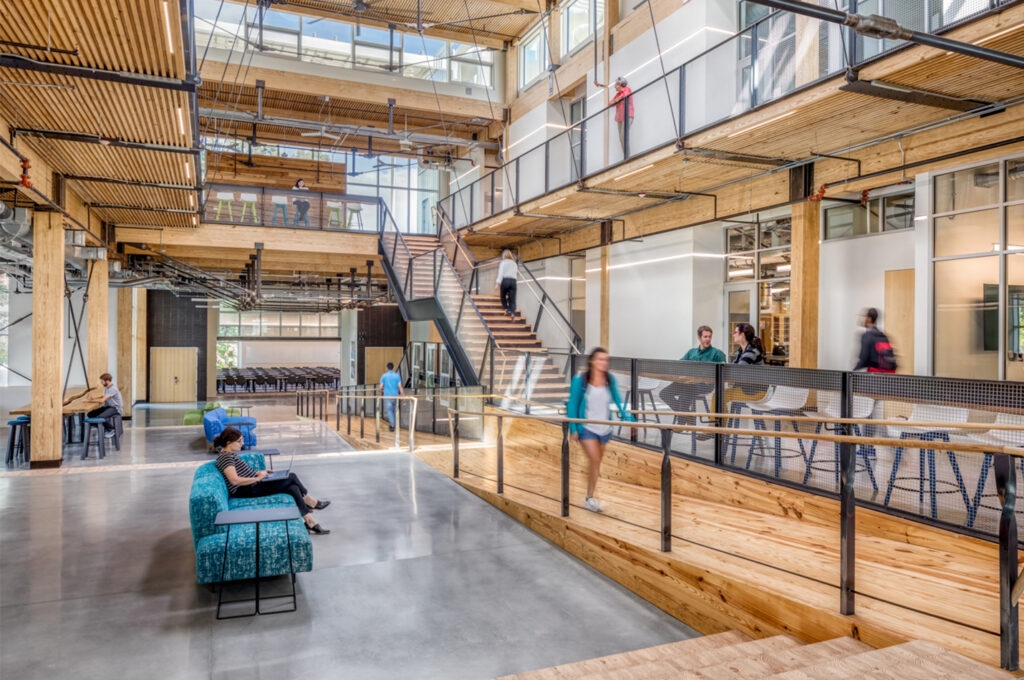
The Kendeda Building for Innovative Sustainable Design at Georgia Institute of Technology | Photo by Jonathan Hillyer
The Kendeda Building for Innovative Sustainable Design, which opened in Atlanta, Georgia, in 2019, challenged another assumption: that net-zero energy Living Buildings could not thrive in the Southeast. Kendeda not only met that challenge—it exceeded it. With an energy use intensity (EUI) of 14 in its first year and a photovoltaic canopy sized to produce roughly 285% of its needs, the building operates as net positive.
But one of the more surprising lessons at Kendeda was around comfort. In a hot, humid climate, we implemented radiant heating and cooling—an approach often not considered in humid climates due to concerns about condensation. By pairing that system with a high-performance envelope and designing for very low loads, the building maintains stable conditions that make radiant systems effective. The result is not just efficiency, but experience: students consistently describe it as one of the most comfortable buildings on campus.
Lesson 3
Resilience and Grid-Interactivity Are the Next Frontier
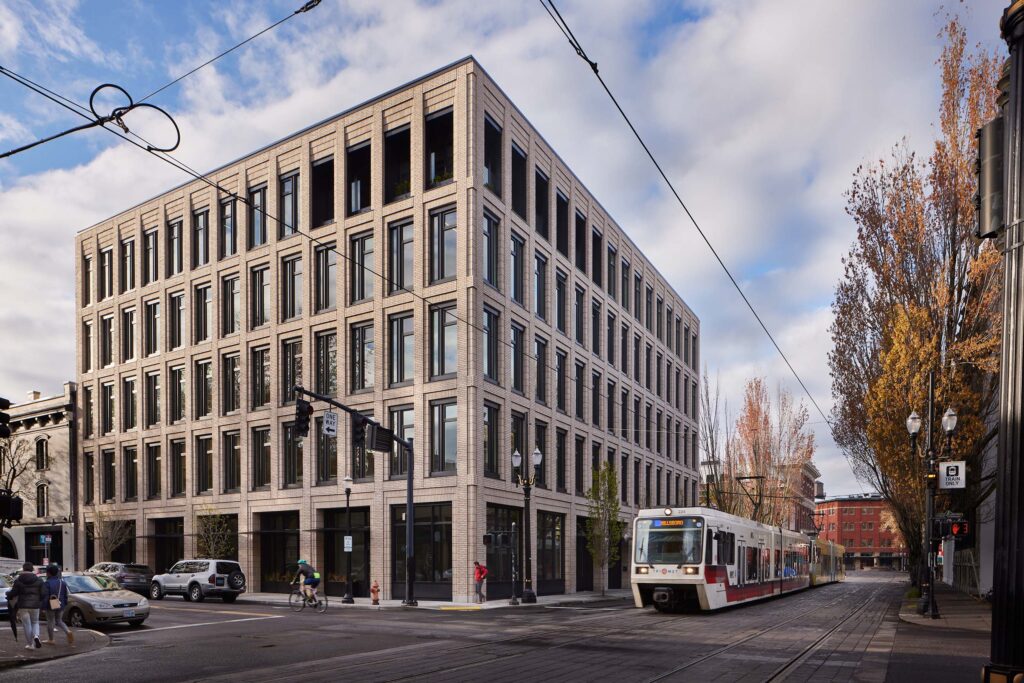
PAE Living Building | Photo by Benjamin Benschneider
When the PAE Living Building opened in 2021, the “impossible” had shifted again. This time, it was about operating net-zero energy in a constrained downtown grid that did not allow traditional net metering.
Partnering with the local utility, we demonstrated a grid-interactive model that blends onsite resources, battery storage, and dynamic operation. The building can operate independently or connect to the existing grid, even feeding power back into it. It represents a future where buildings and utilities collaborate rather than stand apart.
The roof, in this context, became more than a location for panels. It is a strategic platform balancing photovoltaics, minimal mechanical equipment, zoning height limits, and architectural integration into a historic urban fabric.
This is where the conversation is heading: toward 24/7 carbon-free energy, hourly emissions accounting, and buildings that actively respond to grid conditions. Buildings won’t achieve this alone and must be integrated into a modernized electrical grid—giving, taking, and supporting the grid as a carbon-free energy system used by all.
Lesson 4
Evolution Is the Point
Across these four projects—Bullitt Center, RMI, Kendeda, and PAE Living Building—a pattern emerges. Each building disproved a myth:
You can’t do net-zero energy in a dense city. You can’t do it in a cold climate. You can’t do it in a hot, humid one. You can’t do it on a constrained urban grid.
Each time, the myth became a design brief.
Most importantly, lessons ripple forward. Water systems at PAE are directly informed by Bullitt’s early challenges. Load management strategies at Kendeda build on envelope insights from RMI. Comfort strategies at PAE reflect performance feedback at Kendeda.
Living Buildings are not static achievements; they are evolving ecosystems. They are designed to work toward balance energy, water, carbon, and human experience in dynamic ways.
Living Buildings are not static achievements; they are evolving ecosystems. They are designed to work toward balance energy, water, carbon, and human experience in dynamic ways. As we look toward a regenerative future, the next set of “impossibilities” is already forming around carbon and a circular material economy.
If the past 20 years have taught us anything, it is this: what the industry knows to be impossible today is often just waiting for someone to design it differently.
This article is part of a special 20th anniversary series celebrating two decades of the Living Building Challenge. Through reflections from contributors, practitioners, and project teams, we explore lessons from landmark projects, examine the program’s influence on the built environment, and consider what comes next for regenerative design.
Equity
Intentional Sourcing: Wood for Regenerative Buildi…
Conference
Lindsay Baker’s Living Future 2026 Keynote Addre…
ILFI uses cookies to help provide you with the best possible online experience. Please read our Privacy Notice for information about which cookies we use and what information we collect on Living-Future.org. By continuing to use this site, you agree that we may store and access cookies on your device.