

Highlights and Reflections from the Declare Equity Pilot
Program Context
Earlier this summer, Living Future concluded the pilot program for Declare Equity, a first-of-its-kind product-level label program focused on social equity and transparency within building material supply chains. This marked a key milestone after several years of research and development to present a pilot-ready program comprising robust, rigorous metrics designed to facilitate industry-wide transformation toward responsible, transparent supply chains that prioritize fair labor from the manufacturer itself through raw material extraction.
Pilot Recap and Highlights
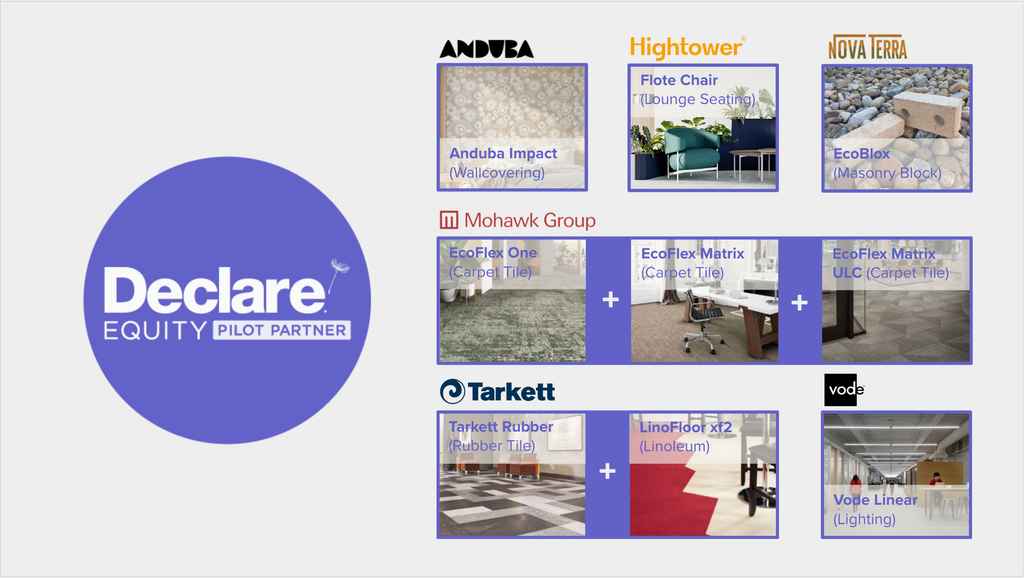
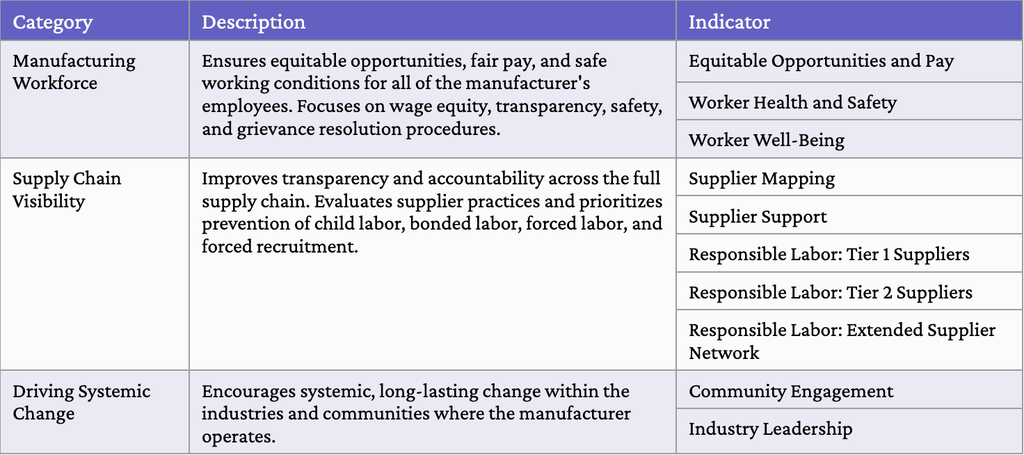
Over the course of the pilot, seven pioneering manufacturers partnered with us to test and refine the pilot program’s indicators and metrics. These partners—covering a range of company sizes, supply chain systems, and product types—contributed valuable time, resources, and insights toward shaping how to define and measure social equity within the real-world contexts of their manufacturing practice. Over the course of six months, pilot participants worked through an early version of the Declare Equity Program Manual and gathered documentation to demonstrate performance across ten indicators.
Given the varying sizes of our partner organizations, this process presented unique challenges and opportunities across the cohort. While all participants found the pilot experience to be a positive and valuable learning experience, what they are taking forward fell into a few different themes:
Cross-functional collaboration: Making progress in social equity cannot be solely an HR or Sustainability Department effort, and it requires working closely together with colleagues across procurement, operations, and leadership teams as well as suppliers.
“Overall, the pilot experience was very valuable and helped us move beyond viewing social equity as solely an HR initiative and begin treating it as a product and supply chain responsibility. The pilot pushed us to examine areas we had not previously formalized, including supplier mapping, social hotspot identification, workforce planning, and supplier engagement on fair labor topics.”
Intentional supply chain examination: Declare Equity provides a framework for investigating the implications of existing supply chain decisions, integrating social equity considerations throughout the supply chain, and pathways for continuous improvement.
“The most powerful thing for me was the supply chain work. Before this pilot, I had made deliberate choices — healthy materials (Red List free), production in the U.S. — but I hadn’t mapped what sits underneath those choices. The hotspot checks forced me to look at my Tier 2 suppliers and ask: what do I actually know about how [supplier] collects the recycled plastic in their substrate? Where does [supplier] source materials for the ink? The answer, honestly, was not much. That awareness alone was worth the time.“
Challenges beyond Tier 1: While most participants have clarity on and strong relationships with direct suppliers, visibility is quite limited beyond Tier 1. Declare Equity can help identify both gaps as well as opportunities and spark the next steps toward greater transparency and engagement.
“[Participating in the pilot] has opened up conversations around visually mapping our supply chain in order to identify gaps in visibility and influence. It has also opened conversations about our Tier 2 suppliers which we really have no visibility into yet.”
Meaningful incremental progress: While full supply chain transparency can be very challenging, taking incremental steps, such as creating roadmaps, documenting assumptions, and pursuing deeper relationships with suppliers, are necessary and meaningful.
Peer learning exchange: The most common highlight we heard was learning that fellow manufacturers—despite all their differences—are all facing similar challenges when it comes to supplier visibility, influencing change, and dynamic sourcing. All participants emphasized the importance of information exchange and greater transparency across the industry in order to spur collective action at all stages of the value chain.
“A key highlight of this pilot was the opportunity to participate in the group calls, where we could hear directly from other organizations about their experiences, interpretations, struggles, and successes. Those conversations offered valuable perspective; the open dialogue was educational and reassuring to see that others were navigating similar ambiguities.”
Next Steps
We are deeply grateful to all the pilot partners for their willingness to help lead industry transformation around equitable and responsible supply chains. Understanding the common experiences and systemic challenges is critical for building a program that is grounded in international best practices while considering the realities of where the industry currently stands as well as the barriers manufacturers face around supply chain visibility.
Together with the Liveable team, Living Future is using the pilot feedback to inform further refinements to Declare Equity pathways and metrics. We look forward to sharing additional updates as this work continues to progress.
If you are interested in supporting the development of Declare Equity, please complete this interest survey.