
A Common Language for Circularity: Moving Toward More Transparent Product Disclosure
While nature continually cycles materials through processes of renewal and regeneration, industry has too often relied on a linear model of extracting resources, manufacturing products, and generating waste. This “take-make-waste” approach has contributed to resource depletion, biodiversity loss, climate change, waste, and harmful chemical releases—eroding the capacity of Earth’s systems to sustain and regenerate life. Transitioning toward a circular economy offers an opportunity to conserve natural resources, support ecosystem health, and reduce these impacts by keeping materials in productive use for longer.
What Does “Circular” Mean?
As circular economy principles gain momentum, manufacturers, designers, policymakers, and purchasers are exploring new ways to move away from linear resource flows. But transitioning to a circular economy requires more than changing materials or product design. It requires transforming the systems that determine how materials flow through the economy.
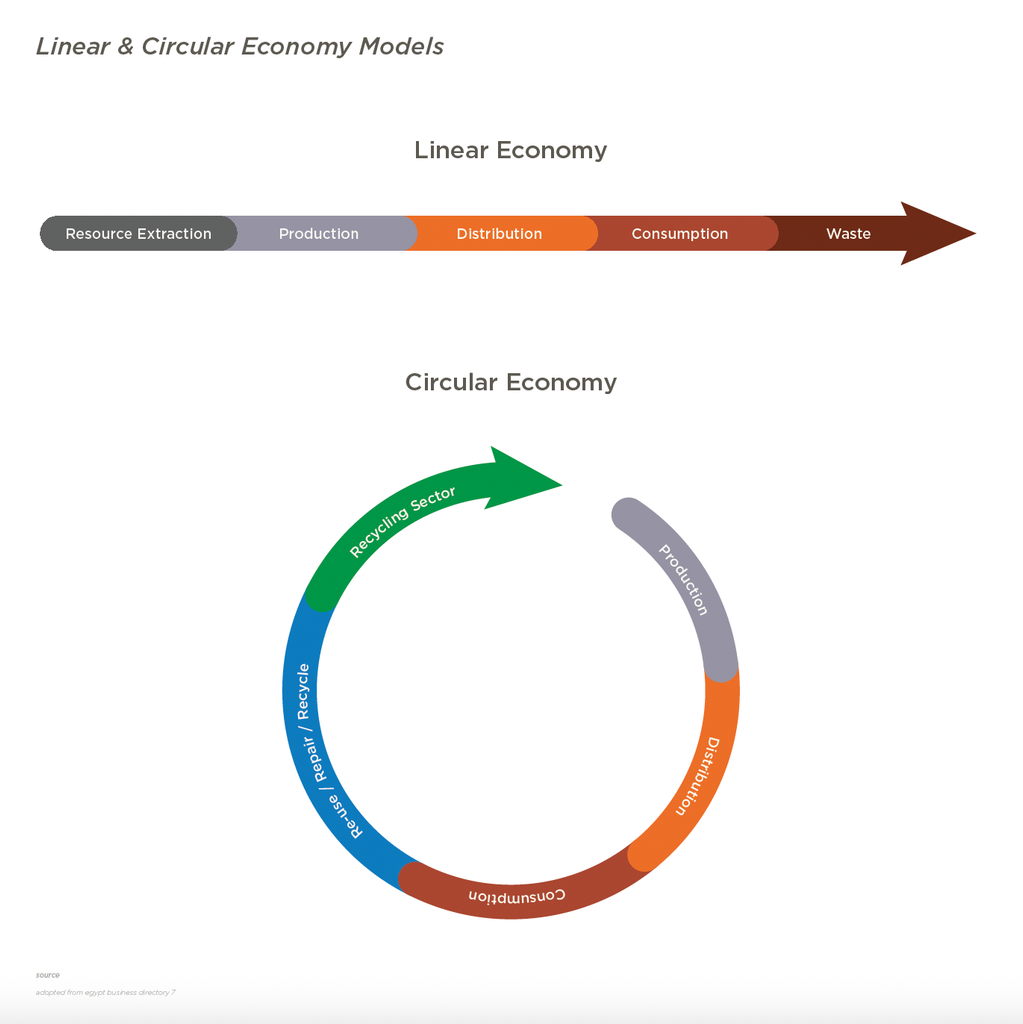
Today, “circular” describes many different aspects of this transformation—from a product’s design or material properties to a company’s business model or the systems that enable recovery and reuse. But a product does not become circular through design alone. Its contribution to a circular economy depends on how its design interacts with available systems and what happens in practice. A product may be designed for disassembly, for example, but without collection and recovery infrastructure, that potential may never be realized.
Because circularity depends on these interconnected conditions—and because those conditions continue to evolve—consistent definitions and standardized disclosure are essential for understanding what circularity claims actually represent.
Toward Standardized Disclosure in Declare 2.1
Declare’s role has always been to provide standardized product transparency for the built environment. Since 2010, Declare has provided public disclosure and screening of product ingredients against chemicals of concern. In Declare 2.1, we extend that transparency-first approach to circularity, expanding end-of-life pathways to include strategies such as repair, reuse, remanufacturing, and energy recovery. Declare 2.1 references definitions from the ISO 59000 series and aligns with emerging circularity disclosure frameworks, including product circularity data sheets.
To improve clarity, the pathways in Declare 2.1 are organized into four categories:
- Producer Responsibility & Recovery Programs – Programs through which organizations accept responsibility for collecting and managing products or materials at end of life.
- Circular Product Design Characteristics – Design attributes that support life extension, repair, material separation, or future recovery.
- Circular Recovery Pathways – Available pathways through which products or materials can be recovered and cycled into subsequent use.
- Residual Management – Pathways for materials that cannot currently be recovered through higher-value circular systems or that require specialized handling.
In Declare 2.1, we extend that transparency-first approach to circularity, expanding end-of-life pathways to include strategies such as repair, reuse, remanufacturing, and energy recovery.
Manufacturers may disclose any applicable programs, design characteristics, recovery pathways, and residual management pathways that apply to their product. For each disclosure, they identify the portion of the product covered by the pathway and provide basic supporting documentation (e.g. disassembly instructions; compostability certification; a link to a relevant EPR program). This creates a consistent way for manufacturers to communicate circular design strategies and investments across programs, markets and supply chains.
Circularity is an emergent property of the overall system—not solely a characteristic of a product. For this reason, Declare 2.1 focuses first on standardized disclosure of the product attributes and recovery pathways that enable circular outcomes, rather than reducing them to a single score.
A Closer Look: When ‘Recyclable’ Isn’t Enough
The difference between being technically recyclable and recyclable in practice illustrates why more precise circularity disclosure matters. A material may be capable of being recycled, but without the infrastructure to collect, sort, and process it where it is used, it may never be recovered. Treating these scenarios as equivalent can make it difficult to understand a product’s true end-of-life potential.
To better distinguish between these outcomes, Declare 2.1 separates Highly Recyclable Materials from Specialized Recycling Pathways. Materials such as steel, aluminum, glass, paper, cardboard, PET, and HDPE are accepted within established recycling systems and can realistically be recovered in many markets. Other materials—including carpet, gypsum board, composite materials, multilayer products, and many engineering plastics—may be recyclable but typically depend on specialized collection programs or processing infrastructure.
This distinction helps make circular opportunities and challenges more visible. For designers and specifiers, it makes it easier to understand not just whether a product has a recovery pathway, but what infrastructure and actions are required to use it.
Building a Transparent Foundation for Circularity
For a circular economy to function effectively, participants need a common language and reliable information. Designers need to understand how materials can be recovered; specifiers need to distinguish between different circular strategies; and recovery programs need products that are designed for the systems they operate. Collection, sorting, repair, remanufacturing, and recycling all depend on knowing what materials are in products and what pathways they were designed to support.
For the built environment, this challenge is amplified by the long lives of buildings and building products. A product may remain in a building for decades before it reaches its next use, creating a need for circularity information to remain accessible and useful long after the product is manufactured, installed, and initially specified. The information may need to travel with the product—from the original manufacturer and specifier to the building owner, facility manager, or deconstruction team responsible for its next life.
A consistent vocabulary and durable disclosure framework can provide that common language – a critical step toward understanding and advancing circularity in the built environment. Declare 2.1 puts this approach into practice by establishing a common framework for disclosing circular design characteristics, recovery programs, and end-of-life pathways across building products. As this information—and the systems for preserving, accessing, and using it – becomes more robust, it can support a deeper understanding of how products contribute to circular systems and where additional innovation is needed.
Over time, standardized data can help the industry move beyond simply identifying available pathways to asking more complex questions: Which strategies are most effective? Where are the biggest gaps in recovery infrastructure? What product characteristics best support long-term material cycling? What does leadership in circular product design look like?
Advancing a Circular Ecosystem
The transition to a circular economy will not be achieved by better products alone. It depends on an interconnected ecosystem of manufacturers, designers, contractors, building owners, waste haulers, recyclers, policymakers, and many others making decisions that collectively keep materials in productive use.
By improving the quality, consistency, and transparency of information that flows between participants, we can help create the conditions for materials to remain in use longer, resources to retain their value, and the built environment to move steadily from an extractive model toward one that is increasingly regenerative. A circular economy is not an end in itself, but a means of reducing extraction, retaining material value, and creating more regenerative relationships between people, materials, and the living systems on which we all depend.